Breaking the "Shame" Cycle: Why Your Grades Aren't Your Identity
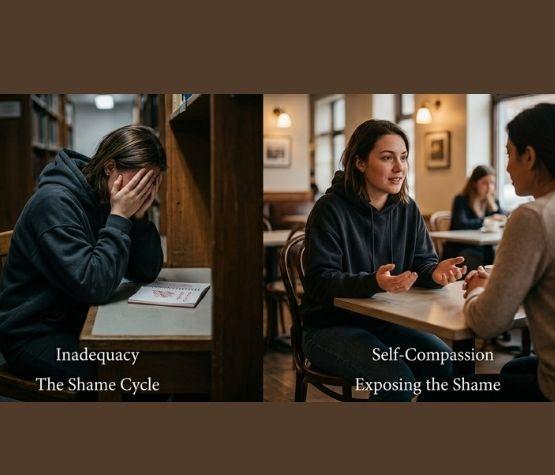
In a high-pressure academic environment, failure often feels like more than just a setback—it feels like a character flaw. For many students, not meeting a high standard triggers a deep sense of Inadequacy, leading to a cycle that is difficult to break. To overcome this, we must distinguish between two very different emotions: Guilt and Shame.
The Vital Distinction: Guilt vs. Shame
Understanding the difference between these two internal signals is the first step toward emotional regulation and a healthier "Felt Sense" of self.
- Guilt (The "Corrective" Signal): Guilt is focused on behavior. It says, "I did something bad" (like procrastinating on a paper or failing to study). Because it targets the action, it is often productive, acting as a teacher that calls you to align with your values next time.
- Shame (The "Identity" Signal): Shame is focused on the self. It says, "I am bad" or "I am flawed". It feels like a cold, heavy sludge that makes you want to hide, disappear, and stop trying altogether.
How the Shame Cycle Traps Students
When academic pressure is high, a poor grade can easily shift from guilt into shame.
- The Identity Erosion: Instead of seeing a "D" as a sign that your study strategy failed, shame tells you that you are inherently "less than" your peers.
- The Shutdown Response: Shame often triggers a Nervous System Shutdown. When you feel like a "failure," your brain tries to protect you by making you stop caring, leading to Apathy or further procrastination.
- The Inadequacy Loop: This creates a pattern where you are too afraid to try because you fear the "Identity Crisis" that comes with a mistake.
Pattern-Interrupt: How to Break the Cycle
To move forward, we must transform shame back into productive guilt or, better yet, into self-compassion.
- Label the Emotion: When you feel that sinking feeling, ask: "Am I upset with my work or am I attacking my worth?".
- Separate Effort from Outcome: Remember that your competence is a journey, not a fixed trait. You are allowed to be a work in progress.
- Practice Self-Compassion Talk: Speak to yourself like you would a best friend. You wouldn't tell a struggling friend they are "worthless"; don't say it to yourself.
- Expose the Shame: Shame thrives in secrecy. Speaking about your feelings to a trusted mentor or peer can "kill" the shame through empathy.
The Takeaway
Your grades are a measurement of your performance in a specific moment, not a measurement of your value as a human being. Shame is a liar—it tells you that your mistakes define your entire existence, when they are actually just signals for growth.
Reality Check: "A failure is an event, never a person. Once you’ve learned the lesson, the heavy feeling has no more work to do".