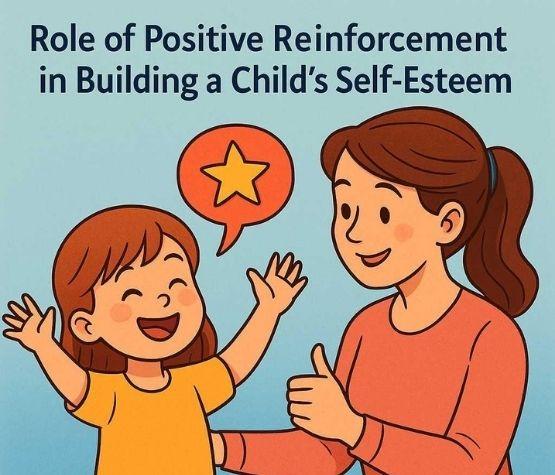
Role of Positive Reinforcement in Building a Child’s Self-Esteem
Every child carries within them a unique spark, one that grows brighter when nourished with encouragement and understanding. On Children’s Day, as we celebrate their innocence, curiosity, and endless potential, it’s important to highlight one powerful psychological tool that shapes their inner world: positive reinforcement.
TBIF explores how this simple strategy can transform a child’s self-esteem and emotional development.
T – Thoughts: What Positive Reinforcement Really Means
Positive reinforcement isn’t about empty praise. It’s about recognizing and rewarding constructive behaviors so children learn what they did right and feel motivated to repeat it.
Examples include:
- Appreciating effort (“You worked really hard on this!”)
- Rewarding small improvements
- Celebrating acts of kindness
- Encouraging problem-solving and independence
This teaches children that their actions matter and that they have the power to influence outcomes.
B – Behaviours: How It Shapes Their Self-Esteem
Self-esteem doesn’t suddenly appear. It is built gradually through moments where a child feels seen, valued, and capable.
Positive reinforcement helps by:
- Strengthening a child’s belief in their abilities
- Reducing fear of failure
- Encouraging healthy risk-taking
- Building internal motivation
- Helping them recover from mistakes without shame
When a child receives positive reinforcement for effort rather than perfection, they learn that growth is more important than being flawless.
I – Impact: Long-Term Emotional and Social Benefits
Consistent positive reinforcement affects not just childhood, but the entire emotional trajectory of a person’s life.
Long-term benefits include:
- Better academic performance
- Stronger emotional regulation
- Healthier relationships
- Reduced anxiety and self-doubt
- Higher resilience in challenging situations
Children who grow up with supportive validation develop a strong, stable inner voice — one that empowers them rather than criticizes them.
F – Future: How Caregivers and Educators Can Apply This Daily
Positive reinforcement isn’t complicated. Here are simple ways to weave it into everyday interactions:
- Praise specifically — Instead of “Good job,” say, “I love how patiently you solved that puzzle.”
- Notice effort — “You kept trying even when it was tough.”
- Model positive language — Children absorb the tone adults use.
- Use non-material rewards — High-fives, smiles, acknowledgement, extra playtime.
- Be consistent — Reinforcement works best when done regularly.
The goal is to help children develop intrinsic confidence, not just a need for external approval.
Conclusion
This Children’s Day, let’s remember that every encouraging word, patient correction, and celebration of effort contributes to shaping a child’s self-esteem. Positive reinforcement is more than a technique — it’s an emotional investment that helps children believe:
“I am capable. I am valued. I matter.”
When we empower them today, we nurture the confident, emotionally strong individuals they will become tomorrow.