The Silent Pandemic: Navigating the Loneliness Epidemic
We are more "connected" than any generation in human history. We can see what a friend from primary school had for breakfast, track a colleague’s vacation in real-time, and send a message across the globe in a millisecond. Yet, beneath this digital hum, a silence is growing.
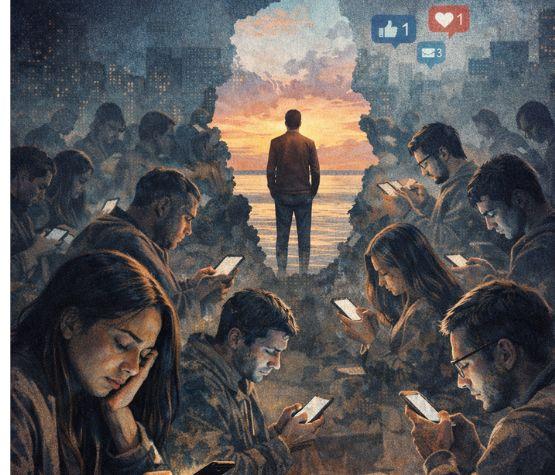
We are living through a loneliness epidemic. It is a quiet crisis that doesn't always look like isolation; sometimes, it looks like a crowded room where everyone is looking at their laps. It’s a health crisis that doctors are beginning to realize is as physically damaging as smoking fifteen cigarettes a day.
The Digital Illusion of Connection
The greatest trick the modern world played on us was convincing us that interaction is the same thing as connection.
- The Scroll: We spend hours "consuming" other people’s lives. We know their faces, their curated successes, and their aesthetic homes. But consumption is passive. It doesn't nourish the soul; it often leaves us feeling like we are looking through a window at a party we weren't invited to.
- The Vulnerability Gap: Real connection requires the risk of being seen. Social media, however, rewards the "filtered" self. When we only show our highlights, we feel lonely because the world is applauding a version of us that doesn't actually exist.
The Physicality of Loneliness
Loneliness is not just a "sad feeling"; it is a biological alarm system. Evolutionarily, being cast out of the tribe meant certain death. Because of this, our brains treat social isolation as a physical threat.
When we feel chronically lonely, our bodies enter a state of hyper-vigilance. Our cortisol (stress hormone) levels spike, our sleep quality drops, and our immune systems weaken. It is our body’s way of saying, "You are alone in the wild—stay awake, stay alert, be afraid." The tragedy of the modern epidemic is that many of us are stuck in this "survival mode" while sitting safely on our couches.
The "Third Place" is Vanishing
Sociologists often talk about the "Third Place"—the physical locations that aren't home (the first place) and aren't work (the second place). These are the coffee shops, libraries, parks, and community centers where people gather without an agenda.
As our world becomes more digitized and "convenient," these third places are disappearing. We order groceries to our door, we stream movies instead of going to theaters, and we work from home. We have traded the messy, spontaneous joy of human proximity for the sterile efficiency of an app. In doing so, we’ve lost the "weak ties"—the casual chats with the barista or the neighbor—that actually keep us grounded in reality.
- "Loneliness is the poverty of self; solitude is the richness of self." — May Sarton
Breaking the Fever
How do we cure an epidemic that thrives on invisibility? It starts with a shift from efficiency back to humanity.
- Prioritize Proximity: A text is a placeholder; a phone call is a bridge; a face-to-face meeting is the destination. We must choose the "inconvenience" of showing up in person.
- Embrace the Awkward: Deep connection doesn't happen in the highlights. It happens in the awkward silences, the shared struggles, and the moments where we admit, "I’m actually not doing that great."
- Be the Initiator: Everyone is waiting to be invited. The irony of the loneliness epidemic is that the person sitting next to you is likely just as starved for conversation as you are. Be the one who breaks the silence.
The Bottom Line
Loneliness is not a personal failure; it is a structural byproduct of the way we’ve built our modern lives. To heal, we have to stop treating our screens as mirrors and start treating our communities as anchors. We are a social species, meant to be tangled up in each other's lives. It’s time we put down the glass and reached for the hand.