The Radical Art of Disappearing: Why Some Teens Are Embracing Digital Minimalism
For nearly two decades, the cultural narrative around teenagers has been fixed: they are glued to their screens, addicted to notifications, and entirely dependent on the algorithm.
But a quiet, profound shift is happening.
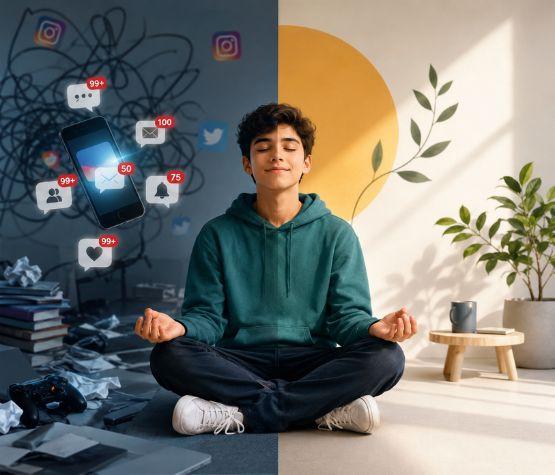
A growing number of teenagers are actively staging a counter-cultural rebellion. Having grown up in a digital fishbowl where every moment is tracked, liked, and monetized, they are experiencing an unprecedented level of connectivity fatigue. The new trend isn't about getting the latest app—it's about learning how to disconnect from them.
Welcome to the era of Digital Minimalism for Teens.
The Reality of "Screen Exhaustion"
Older generations often view social media as a tool for entertainment or connection. But for today’s youth, the digital world often feels like a second, unpaid job. It requires constant public performance, immediate responsiveness, and the curation of an aesthetic identity.
This environment has created a state of chronic nervous system dysregulation—leaving many feeling "exhausted but wired," navigating a constant undercurrent of anxiety.
Digital minimalism isn't a rule imposed by parents; it is a self-initiated survival strategy. It’s the realization that constant notification pings are a threat to internal peace, emotional safety, and deep focus.
What Does Teen Digital Minimalism Look Like?
This movement doesn’t mean throwing smartphones into the river and moving to the woods. Instead, it’s about radical intentionality. Here is how teenagers are rewriting their relationship with technology:
- The Shifting Social Square
Teens are increasingly stepping away from public-facing profiles where success is measured in likes and public commentary. Instead, they are moving toward "stealth scrolling" and private, low-stakes digital spaces. They are treating platforms like Pinterest or private group chats as digital sanctuaries—places to quietly collect ideas, music, and inspiration without the pressure of performing for an audience.
- Bringing Back the "Dumbphone" and Vintage Tech
In a massive pattern-interrupt to the tech industry's constant upgrade cycle, brick phones (flip phones) and vintage digital cameras are having a massive resurgence. By intentionally downgrading their tech, teens are removing the temptation to endlessly scroll while retaining the practical ability to text or call. It turns a smartphone from a behavioral loop back into a simple utility.
- IRL Hangouts as the Ultimate Premium Experience
Analog experiences are becoming the ultimate status symbol for youth culture. Phone-free hangouts, thrift-shopping trips, board game nights, and casual walks are being treated as premium spaces for genuine connection. Putting a phone face-down on a table is no longer just polite; it’s a modern "green flag" signaling that a person values real-world presence over a digital high.
- Protecting the "Felt Sense" of Life
When every moment is photographed, recorded, and uploaded, the actual experience of the moment gets lost. Digital minimalists are practicing the art of keeping things to themselves. They are choosing to experience a concert with their eyes rather than through a lens, recognizing that a memory held in the body is far more valuable than content stored on a cloud.
How to Start Your Own Digital Detox
If you feel the invisible drag of digital exhaustion, you don’t have to change your entire life overnight. Digital minimalism is built on micro-habits:
- The Grayscale Trick: Turn your phone's display to black and white. Removing the bright, dopamine-inducing colors immediately makes the screen look boring and less addictive.
- Nuke the Notifications: Turn off all notifications except for direct messages from real humans. Your phone should wait for you to look at it; it shouldn't yell at you to look at it.
- Create Tech-Free Zones: Designate your bed or the dinner table as a zero-phone architecture. Give your nervous system a physical space where it knows it is safe from digital noise.
The New Green Flag
The future belongs to those who can control their own attention. By choosing capacity over constant productivity and deep presence over digital noise, teens practicing digital minimalism aren't missing out on the world—they are finally taking it back.
What is one app on your phone that drains your energy rather than giving you life? What would happen if you deleted it just for a weekend?