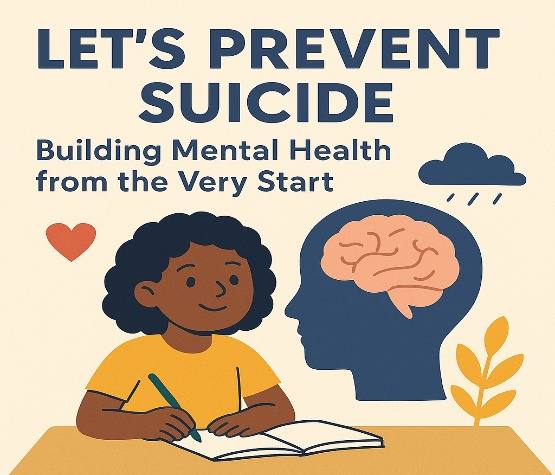
Let’s Prevent Suicide: Building Mental Health from the Very Start
Every year on World Suicide Prevention Day, the conversation revolves around awareness, prevention, and compassion. While these are vital, prevention often begins too late—only after someone has already started struggling. What if we shifted the perspective and built a foundation of mental health from childhood itself?
Why Start with Children?
Children are taught how to read, solve equations, and memorize historical dates. They learn about hygiene, exercise, and nutrition. But what about emotional hygiene?
Imagine if schools treated mental health the way they treat academics or physical fitness. If children were introduced to concepts like:
- Emotional regulation – naming and managing big feelings like anger, sadness, or fear.
- Cognitive Behavioral Therapy (CBT) techniques – learning how thoughts influence feelings and behaviors, and how to challenge unhelpful thoughts.
- Stress management skills – breathing techniques, relaxation exercises, and problem-solving strategies.
- Understanding anxiety and depression – so they know these are not character flaws but conditions that can be managed.
These are not just crisis tools; they are life skills that can reduce long-term vulnerability to suicidal thoughts and behaviors.
The Role of Psychologists in Schools
What if every school had a dedicated psychologist, not just for emergencies, but as part of everyday education? This would mean:
- Regular group sessions on coping skills, peer pressure, body image, and relationships.
- One-on-one check-ins just like routine dental checkups, ensuring children learn that mental health care is normal, not something to seek only in a crisis.
- A culture of openness, where students grow up knowing that talking about emotions is as natural as discussing homework.
Children who regularly meet psychologists will not hesitate to seek help later in life. They will see therapy not as a last resort, but as a normal, proactive choice—a tune-up for the mind.
Long-Term Impact
Research already shows that suicide is the leading cause of death among young people in India, with students accounting for nearly 10% of suicides in 2022. Academic pressure, family expectations, and lack of coping skills are major triggers. But if children grew up learning how to handle stress and emotions, these triggers would lose much of their destructive power.
By integrating psychologists into schools, we are not just preventing suicide—we are shaping a future generation of emotionally resilient individuals who know how to seek help, support others, and create healthier communities.
A Different Kind of Prevention
Suicide prevention doesn’t only happen in crisis centers, hospitals, or helplines. It begins in classrooms, playgrounds, and assemblies, where children can be given the tools to manage life’s challenges. Just as we brush our teeth daily to prevent cavities, mental health checkups and skills can prevent emotional breakdowns.
If we want to prevent suicide in the long run, we need to move from reaction to preparation. Let’s give every child the gift of emotional education and normalize psychologists in schools. Because when mental health becomes part of everyday learning, children won’t just grow into professionals or achievers—they will grow into individuals who know how to live, feel, and cope.
On this Suicide Prevention Day, let’s pledge to start early. Prevention doesn’t just save lives—it builds stronger ones.